




Monthly Highlights
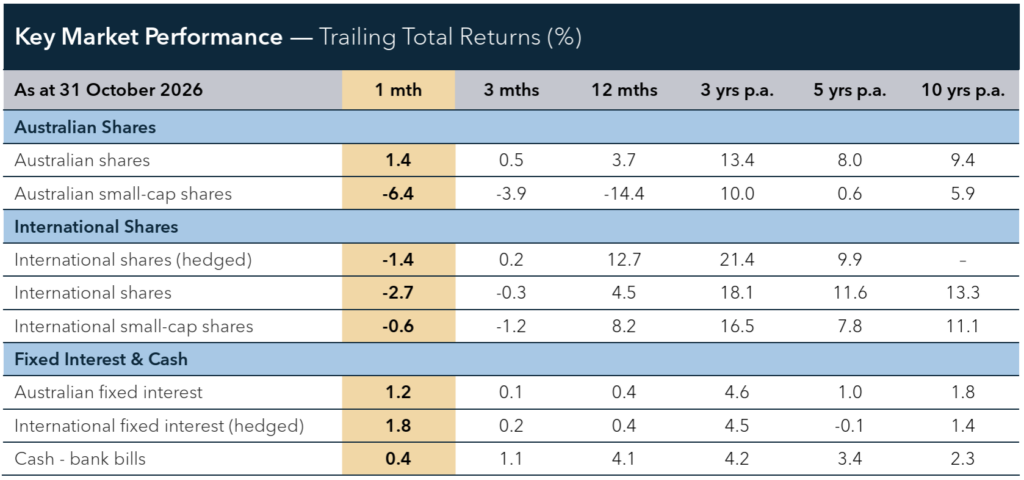
Global share markets stumbled in October, led by a late-month sell-off in US technology companies. Concerns that heavy spending on artificial intelligence (AI) will translate into profits, along with disappointing earnings from some technology companies, weighed on investor confidence. Rising oil prices fuelled inflation concerns, while central banks remained focused on controlling inflation. In contrast, bond markets rallied strongly as government bond yields fell in Australia and the US.
Australian shares bucked the global trend and finished higher, led by financials and healthcare sectors. Stronger-than-expected September inflation data set the stage for the Reserve Bank of Australia’s rate rise in early November, yet the local market looked past the prospect of tighter policy and pushed higher over October. Materials and technology sectors weakened, and smaller companies lagged their larger peers, as gains were concentrated among the major banks and defensive sectors.
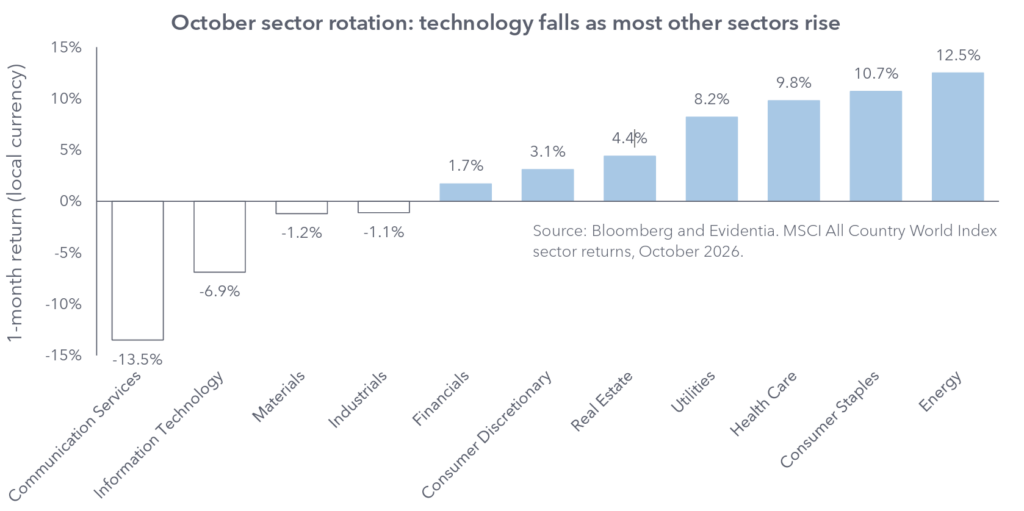
International shares had a tougher month. US markets were dragged lower by sharp falls in technology and communication services companies, while most other sectors recorded gains. Europe declined amid higher energy costs and interest rate concerns, while Japan was dragged lower by technologyrelated weakness. Emerging markets fell sharply, particularly China, Taiwan and South Korea, as concerns over AI spending weighed on technology companies. A stronger Australian dollar further reduced returns from unhedged overseas investments.
Australian and global fixed interest markets led the way as government bond yields fell. In Australia, rising unemployment and falling home prices pointed to a slowing economy, strengthening expectations that rates would eventually ease and lifting bond prices. Global bonds outperformed, with yields falling further in the US than in Australia. Corporate bonds lagged, particularly lower-quality high-yield bonds, as investors demanded compensation for the additional risk.
Market Observations and Outlook
October was a month in which sentiment, rather than economic fundamentals, set the tone for markets. Business activity held up well, but doubts over AI spending and rising Middle East tensions dented confidence, prompting investors to favour safer assets.
The biggest shift came in artificial intelligence, where attention turned to whether the vast sums being spent on AI infrastructure will pay off. Softer earnings from several large technology companies, higher borrowing costs and growing competition from China added to those doubts, with more heavily indebted companies coming under the most pressure. This reflects greater focus on returns for AI-related companies rather than a loss of interest in the broader theme.
Geopolitical and political developments added to the uncertainty. Middle East tensions lifted oil prices and kept inflation concerns in view, while fiscal pressures in France and Brazil’s election outcome showed how quickly domestic politics can shake market confidence. In the US, the Democrats won both the House and the Senate in early November’s midterm elections, setting up a divided government for the final two years of President Trump’s term.
Central banks continued to lean against inflation, though not all at the same pace. The US Federal Reserve held rates steady but left the door open to an increase in December. Meanwhile, the Bank of Canada raised rates for the first time since it began cutting them after the pandemic, joining a growing list of major central banks now tightening. This points to inflation pressures that are broad-based rather than isolated, with markets now pricing in further rate rises across major central banks. Against this backdrop, high-quality government bonds played their traditional defensive role, rising in value and providing stability while share markets became more volatile.
In Australia, persistent inflation led the Reserve Bank to raise the cash rate again in early November. However, a divided Board and a softer tone on further increases suggest the tightening cycle may be approaching its end. Falling home prices and a gradually softening labour market are weighing on households, but these same pressures should help ease inflation over time, and markets are pricing in the prospect that interest rates could be cut in the second half of next year. The near-term risk, however, sits with further policy tightening.